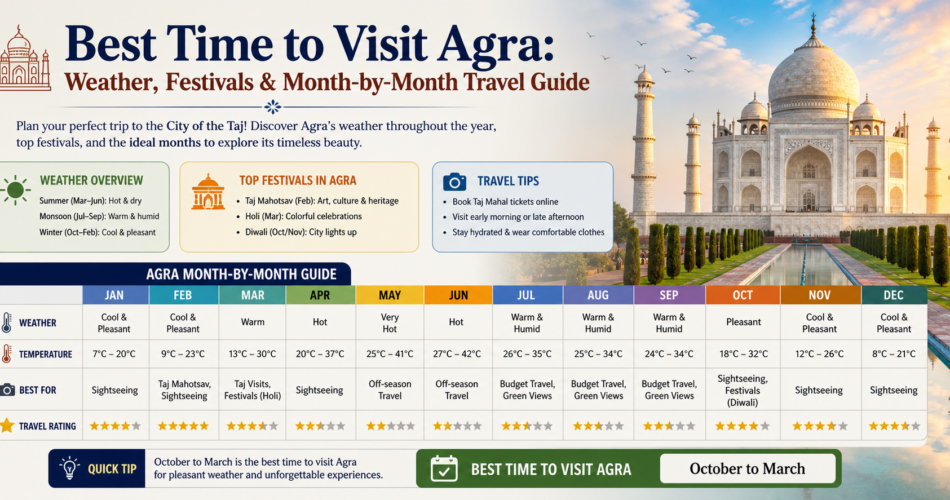
Planning a trip to Agra becomes easier when you understand the city’s weather, festivals and seasonal travel conditions. The best time to visit Agra generally falls during the cooler months and pleasant transition seasons, when sightseeing around the Taj Mahal, Agra Fort and other historic attractions is more comfortable.
Agra experiences hot summers, a monsoon period and cooler winters. Official tourism information highlights February to April and September to November as particularly pleasant periods, while the District Agra tourism profile broadly identifies October to March as a favorable tourist season.
Whether you are planning a weekend trip, family vacation, couple’s getaway or Golden Triangle tour, choosing the right season can make your Agra experience more comfortable.
What Is the Best Time to Visit Agra?
The ideal time depends on what you want from your trip.
For Comfortable Sightseeing: February to April
Spring offers a good balance of manageable temperatures and pleasant sightseeing conditions. February is especially popular because Agra hosts the annual Taj Mahotsav during this period.
For Winter Travel: October to March
The cooler season is widely preferred for sightseeing. December and January can have chilly mornings, while daytime conditions are generally more comfortable for exploring monuments.
For Pleasant Autumn Weather: September to November
The transition toward cooler weather makes September to November another useful period for exploring Agra.
For Budget-Focused Travel: Summer and Monsoon
Hotter months and periods with fewer visitors can sometimes provide different travel opportunities, but travellers should be prepared for heat, humidity or rain and plan outdoor sightseeing accordingly.
Agra Weather Throughout the Year
Agra’s temperatures vary significantly between seasons. Current Incredible India climate information lists approximate monthly temperature ranges from about 4.1°C to 46.1°C, depending on the month.
| Month | Approx. Temperature Range | Travel Conditions |
| January | 4.1–27.7°C | Cool mornings, comfortable days |
| February | 6.7–31.7°C | Pleasant for sightseeing |
| March | 10.1–38.6°C | Increasingly warm |
| April | 15.1–43.1°C | Hot afternoons |
| May | 20.5–46.1°C | Very hot |
| June | 20.8–46.0°C | Very hot |
| July | 21.7–41.3°C | Warm with monsoon influence |
| August | 21.6–37.1°C | Warm and wetter |
| September | 20.7–37.4°C | Warm, transitioning |
| October | 14.8–37.5°C | More comfortable |
| November | 9.4–33.2°C | Pleasant |
| December | 4.5–27.6°C | Cool and comfortable |
Temperature ranges are approximate tourism-climate figures and can vary from year to year.
Agra in January
January is one of the coolest months in Agra. Early mornings and evenings can be chilly, while daytime temperatures are generally more comfortable.
It can be a good month for monument sightseeing, but travellers should carry warm clothing for early-morning visits to the Taj Mahal.
January Travel Tips
- Carry a warm jacket or sweater.
- Plan morning sightseeing with the cooler temperatures in mind.
- Check visibility and weather conditions before sunrise visits.
- Keep some flexibility in your itinerary.
Agra in February
February is one of the most attractive months for an Agra trip. Temperatures are generally pleasant, and the city hosts the famous Taj Mahotsav.
Taj Mahotsav is a ten-day annual festival held in February near the Taj Mahal at Shilpgram, featuring arts, crafts, cultural performances and traditional food.
Why Visit in February?
- Pleasant sightseeing weather
- Taj Mahotsav
- Comfortable conditions for photography
- Good season for family trips
- Suitable for exploring multiple monuments
Agra in March
March marks the transition toward warmer weather. Early mornings can still be comfortable, while afternoons become increasingly warm.
It can be a useful month for travellers who want to combine heritage sightseeing with a spring-season visit.
March Tips
Try to schedule major outdoor attractions earlier in the day and keep afternoons less crowded with activities.
Agra in April
April can become quite hot, especially during the afternoon. Incredible India’s current tourism data places Agra’s approximate April range at 15.1–43.1°C.
If travelling in April:
- Start sightseeing early.
- Carry water.
- Use sun protection.
- Wear comfortable, breathable clothing.
- Avoid packing too many outdoor activities into the afternoon.
Agra in May
May is among the hottest months of the year, with the current tourism climate data showing temperatures potentially reaching around 46°C.
Travellers visiting in May should plan carefully around the heat.
A private air-conditioned vehicle can make travel between attractions more comfortable, particularly for families and groups.
Agra in June
June remains extremely hot. Outdoor sightseeing during the middle of the day can be tiring, so early-morning and evening activities may be more comfortable.
If you travel during June, allow enough time for breaks and keep drinking water available.
Agra in July
July brings monsoon influence, although temperatures can remain high. Rain can affect outdoor plans, so flexibility becomes important.
The advantage of travelling during this period is that the city can have a different atmosphere compared with the peak sightseeing season.
Agra in August
August remains warm and can experience rainfall. Travellers should check the weather forecast before planning long outdoor sightseeing sessions.
If visiting during August, keep an alternative indoor or flexible activity available in case of heavy rain.
Agra in September
September is a transition month. Conditions can remain warm, but the weather gradually moves toward the more comfortable autumn season.
It can be a useful time for travellers who prefer to avoid the peak winter period while still enjoying Agra’s major attractions.
Agra in October
October is generally more comfortable than the summer months, making it a popular period for sightseeing.
The cooler transition makes it easier to spend several hours exploring attractions such as the Taj Mahal and Agra Fort.
Agra in November
November is another comfortable month for an Agra sightseeing tour. Temperatures become more pleasant, making outdoor exploration easier.
It is a good month to plan a complete itinerary covering the Taj Mahal, Agra Fort, Itimad-ud-Daulah, Mehtab Bagh and local markets.
Agra in December
December brings cooler weather, especially during mornings and evenings. Daytime sightseeing can be comfortable, while early visitors should carry warm clothing.
December is suitable for travellers planning Agra as part of a Delhi–Agra–Jaipur Golden Triangle journey.
Best Festivals and Events in Agra
Weather is not the only factor when deciding when to visit Agra. Festivals can add a cultural dimension to your trip.
Taj Mahotsav
Taj Mahotsav is one of Agra’s best-known annual cultural festivals. It is held for ten days in February at Shilpgram near the Taj Mahal.
Visitors can experience traditional arts, handicrafts, food, folk performances and cultural activities.
Bateshwar Fair
The Bateshwar Fair takes place around October or November and is associated with Bateshwar, located around 70 km from Agra. The event has religious, cultural and livestock-fair elements.
Ram Barat
Ram Barat is a major local religious and cultural procession held before Dussehra. It forms part of Agra’s Ramleela celebrations and attracts large numbers of visitors.
Kailash Fair
Kailash Fair is held around August or September at Kailash Temple, about 12 km from Agra, and is associated with celebrations dedicated to Lord Shiva.
Festival dates can vary each year, so check official announcements before planning your travel around a specific event.
Best Time to Visit the Taj Mahal
The Taj Mahal is Agra’s most famous attraction and can be visited throughout the year, subject to its official visitor schedule.
The monument currently opens 30 minutes before sunrise and closes 30 minutes after sunset, with regular closure on Fridays.
For a more comfortable sightseeing experience, many travellers prefer the cooler months and pleasant transition seasons.
If you plan to visit around sunrise, check the current official opening information before travelling.
Best Time for Different Types of Travellers
Families
October to March can provide comfortable conditions for families exploring Agra’s major monuments.
Couples
February to April and October to November can offer pleasant conditions for sightseeing and photography.
Solo Travellers
Solo travellers can visit throughout the year, but the cooler seasons generally make extended outdoor exploration more comfortable.
Photography Lovers
Morning and late-afternoon visits can provide attractive light and more comfortable conditions, regardless of season.
History Enthusiasts
October to March provides a comfortable window for spending more time exploring Agra Fort, the Taj Mahal and other heritage sites.
What to Pack for Agra
Your packing list should depend on the season.
Winter
- Warm jacket
- Sweater
- Comfortable shoes
- Light layers
Summer
- Light cotton clothing
- Sunglasses
- Hat or cap
- Sunscreen
- Water bottle
Monsoon
- Compact umbrella
- Rain protection
- Comfortable footwear
- Quick-drying clothing
Regardless of season, comfortable footwear is useful because Agra sightseeing involves walking around large heritage complexes.
Tips for Planning Your Agra Trip
Start Sightseeing Early
Early starts can be particularly useful during warmer months.
Check Monument Timings
Always verify current opening hours and visitor rules before visiting major attractions.
Keep Your Schedule Flexible
Weather, traffic and crowds can affect sightseeing time.
Book Transportation in Advance
A private vehicle can make it easier to move between attractions according to your planned itinerary.
Plan Around Festivals
If you want to experience a particular festival, verify its dates before booking accommodation and transportation.
Explore Agra with ASTT
ASTT (Agra Shiv Tour And Travels™) provides Agra sightseeing and private transportation services for travellers visiting the city in different seasons.
Depending on your travel requirements, ASTT can help arrange customized sightseeing around attractions such as the Taj Mahal, Agra Fort, Itimad-ud-Daulah, Mehtab Bagh and other nearby destinations.
Private transportation can be particularly convenient during hot months because travellers can move between sightseeing locations in an air-conditioned vehicle.
For Agra tour planning and transportation assistance, contact ASTT at +91-9759000249.
Frequently Asked Questions
What is the best time to visit Agra?
February to April and September to November are highlighted by Incredible India as pleasant periods, while the District Agra tourism profile broadly identifies October to March as a favorable tourist season.
Which month is best for visiting the Taj Mahal?
February, March, October and November generally offer more comfortable sightseeing conditions than the hottest summer months. However, the right month depends on your weather and travel preferences.
Is Agra worth visiting in summer?
Yes, Agra can be visited in summer, but May and June can be extremely hot. Early-morning sightseeing, hydration and breaks become especially important.
Is winter a good time to visit Agra?
Yes. Winter is generally comfortable for sightseeing, although January mornings and evenings can be cold.
When is Taj Mahotsav held?
Taj Mahotsav is an annual ten-day festival held in February at Shilpgram near the Taj Mahal. Check the official schedule for the exact dates of the year you plan to visit.
Can I visit Agra during the monsoon?
Yes. July through September can be part of an Agra trip, but rainfall and humidity may affect outdoor sightseeing, so maintaining a flexible schedule is useful.
Is the Taj Mahal open every day?
The Taj Mahal is closed to regular visitors on Fridays. Current official information lists visiting hours from 30 minutes before sunrise to 30 minutes after sunset.
Final Thoughts
The best time to visit Agra depends on your priorities. For comfortable sightseeing, February to April and September to November are highlighted by official tourism information, while October to March is also identified as a favorable tourist season by the District Agra tourism profile.
February can be particularly interesting for visitors who want to experience Taj Mahotsav, while October and November offer pleasant conditions for exploring Agra’s heritage attractions.
Regardless of when you travel, plan your sightseeing around the weather, check current monument timings and keep your itinerary flexible. With the right preparation, Agra can offer a memorable combination of Mughal history, architecture, culture, food and local experiences.
For customized Agra sightseeing and private transportation, contact ASTT (Agra Shiv Tour And Travels™) at +91-9759000249.