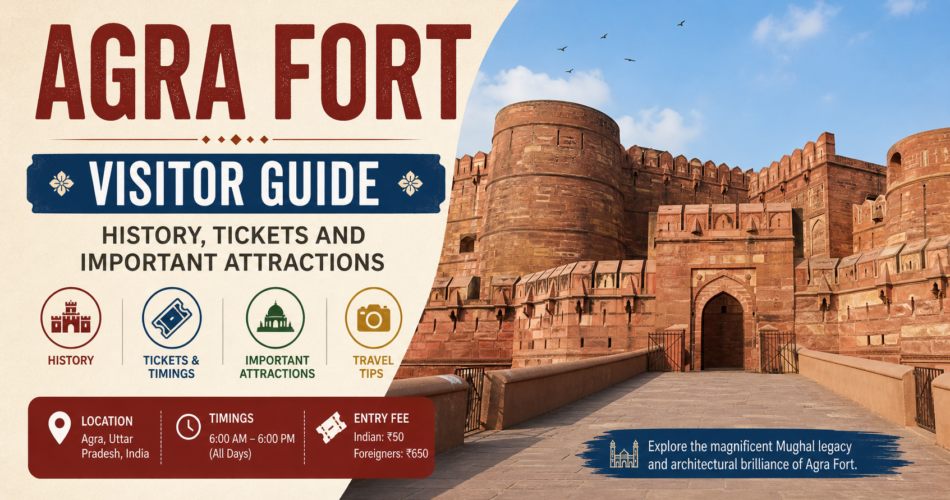
Agra is famous around the world for the Taj Mahal, but its rich Mughal heritage extends far beyond the iconic monument. One of the city’s most important historical landmarks is Agra Fort, a magnificent red sandstone fort that once served as the imperial residence of the Mughal rulers.
This Agra Fort Visitor Guide: History, Tickets and Important Attractions covers everything first-time visitors should know, including the fort’s history, major attractions, ticket information, timings, travel tips and how to conveniently include Agra Fort in a sightseeing itinerary.
About Agra Fort
Agra Fort is a historic walled complex located in the heart of Agra, Uttar Pradesh. It was rebuilt in red sandstone under Emperor Akbar beginning in 1565 and was later expanded and embellished by other Mughal rulers, particularly Shah Jahan.
The fort extends for approximately 2.5 km and contains numerous palaces, audience halls, mosques and other historic structures.
Agra Fort was recognized as a UNESCO World Heritage Site in 1983, reflecting its outstanding historical and architectural importance.
History of Agra Fort
The site of Agra Fort had an earlier fortification before the Mughal period. Emperor Akbar began rebuilding the existing fort in 1565, transforming it into a major imperial complex.
Akbar’s original construction primarily used red sandstone. During Shah Jahan’s reign, several structures were modified or replaced with elegant white marble buildings.
The fort therefore represents several stages of Mughal architectural development.
Over the centuries, Agra Fort witnessed important events in Indian history and remained closely connected with the Mughal Empire.
One of its most famous historical associations is with Shah Jahan, who spent the final years of his life at the fort. The Musamman Burj provides views toward the Taj Mahal across the Yamuna River.
Agra Fort Architecture
The architecture of Agra Fort combines impressive defensive structures with beautifully decorated palaces and halls.
Its massive walls, gateways and bastions reflect its original military importance, while the interiors demonstrate the artistic sophistication of Mughal architecture.
Visitors can see a combination of:
- Red sandstone construction
- White marble buildings
- Decorative stonework
- Mughal arches
- Intricate inlay work
- Courtyards
- Audience halls
- Historic gardens
The combination of military architecture and royal residences makes Agra Fort different from many other monuments in India.
Important Attractions Inside Agra Fort
1. Jahangir Mahal
Jahangir Mahal is one of the prominent structures within Agra Fort.
The palace is associated with Emperor Jahangir and represents the architectural style of the Mughal period. Its large courtyards, sandstone construction and decorative elements make it one of the important areas to explore during your visit.
2. Khas Mahal
Khas Mahal is an elegant palace associated with Shah Jahan.
Unlike the massive defensive walls outside the complex, Khas Mahal demonstrates the more refined and decorative side of Mughal royal architecture.
Its marble details and ornamental design make it a popular attraction inside Agra Fort.
3. Diwan-i-Aam
The Diwan-i-Aam, or Hall of Public Audience, was used for royal audiences and official matters.
The structure provides insight into how the Mughal court functioned and how emperors interacted with visitors and petitioners.
4. Diwan-i-Khas
The Diwan-i-Khas, or Hall of Private Audience, was used for more private royal meetings.
Its architecture demonstrates the luxurious character associated with the Mughal imperial court.
5. Musamman Burj
Musamman Burj is one of the most historically significant structures in Agra Fort.
The octagonal tower is associated with Shah Jahan and provides a memorable view toward the Taj Mahal.
This is one of the places inside the fort where visitors can appreciate the connection between two of Agra’s most important Mughal monuments.
6. Sheesh Mahal
Sheesh Mahal, meaning “Palace of Mirrors,” is another notable structure within the fort.
Its decorative interior reflects the luxurious architectural traditions of the Mughal period.
7. Moti Masjid
Moti Masjid is a white marble mosque located within the Agra Fort complex.
Its simple yet elegant architecture provides a contrast to the massive red sandstone fortifications surrounding it.
Agra Fort Tickets
According to the current Agra district administration information, the listed entry fee is:
- Indian citizens: ₹50 per person
- SAARC/BIMSTEC nationals: ₹90 per person
- Other foreign nationals: ₹650 per person
- Children below 15 years: Free
Fees can be revised by the relevant authorities, so visitors should check the current official ticket information before travelling.
The official Taj Mahal website also lists Agra Fort ticket information and advises visitors to carry identification.
Agra Fort Timings
Agra Fort is generally open from sunrise to sunset, with the Agra district administration currently listing approximate hours of 6:00 AM to 6:00 PM.
The fort is listed as open all seven days, making it a useful sightseeing option when planning an Agra itinerary.
Because timings and entry arrangements can change, it is always sensible to verify the latest official information before your visit.
How to Reach Agra Fort
Agra Fort is centrally located and is easily accessible from major parts of Agra.
It is approximately:
- 2.5 km from the Taj Mahal
- Around 3 km from Agra Cantt Railway Station
- Close to Agra Fort Railway Station and the metro station
Visitor entry is through Amar Singh Gate according to the current Agra district administration information.
You can reach the fort by taxi, auto-rickshaw, local transport or private car.
For families and groups visiting multiple attractions, a private sightseeing cab can be a convenient option.
Best Time to Visit Agra Fort
The cooler months from October to March are generally comfortable for exploring Agra’s outdoor monuments.
During warmer months, consider visiting earlier in the day when temperatures are more comfortable.
Early morning sightseeing also allows you to combine Agra Fort with other attractions while avoiding the hottest part of the afternoon.
How Much Time Do You Need at Agra Fort?
First-time visitors should generally allow around 1.5 to 2 hours to explore the main areas without rushing.
History enthusiasts and photography lovers may want to spend longer.
If you are planning to visit the Taj Mahal, Agra Fort and other attractions on the same day, allow enough travel time between locations rather than creating an overly packed itinerary.
Agra Fort and Taj Mahal in One Day
Agra Fort and the Taj Mahal are relatively close to each other, making it easy to include both in a sightseeing plan.
A simple itinerary could look like this:
Morning
- Taj Mahal visit
- Breakfast
Late Morning
- Travel to Agra Fort
- Explore the fort complex
Afternoon
- Lunch
- Itimad-ud-Daulah or another nearby attraction
Evening
- Mehtab Bagh or local shopping
- Return to hotel or departure point
The exact order can be adjusted according to the Taj Mahal’s opening schedule and your travel plans.
Agra Fort Visitor Tips
Carry Identification
Keep the required identification with you when visiting the monument.
Wear Comfortable Shoes
Agra Fort is a large historical complex, so comfortable footwear is useful.
Avoid Large Bags
Large bags may increase security-check time. Carry only essential belongings.
Follow Heritage-Site Rules
Do not touch, scratch or damage historic surfaces. Visitors should also follow instructions from monument staff.
Consider an Approved Guide
If you want detailed information about Mughal history and architecture, an approved guide can make your visit more informative.
Carry Water Where Permitted
The official Taj Mahal website notes that a water bottle is allowed at Agra Fort. Always follow the latest monument instructions at the entrance.
Why Visit Agra Fort?
Agra Fort is much more than an old fortress.
It offers visitors an opportunity to understand the political, architectural and cultural history of the Mughal Empire.
The combination of enormous defensive walls, royal palaces, marble buildings, audience halls and views toward the Taj Mahal makes the fort one of the most rewarding places to visit in Agra.
For first-time visitors, it provides important historical context that complements a visit to the Taj Mahal.
Explore Agra Fort with ASTT
Planning transportation between Agra’s historical attractions can make sightseeing much easier, particularly for families and groups.
ASTT (Agra Shiv Tour And Travels™) provides local sightseeing taxi and car rental services in Agra, with vehicle options ranging from sedans and SUVs to larger vehicles for groups.
ASTT can help travellers arrange transportation for Agra Fort, Taj Mahal, local markets and other attractions according to their sightseeing plans.
The company also provides one-day car rental and sightseeing services for travellers who want to explore Agra at their own pace.
Book Your Agra Sightseeing Cab
For bookings and travel assistance:
ASTT – Agra Shiv Tour And Travels™
Phone/WhatsApp: +91-9759000249
Whether you need a local sightseeing taxi, one-day car rental or transportation between Agra attractions, you can contact ASTT to discuss your requirements.
Frequently Asked Questions
What is Agra Fort famous for?
Agra Fort is famous for its Mughal architecture, massive red sandstone walls, royal palaces and historic structures such as Jahangir Mahal, Khas Mahal, Diwan-i-Aam, Diwan-i-Khas and Musamman Burj.
Is Agra Fort a UNESCO World Heritage Site?
Yes. Agra Fort was inscribed as a UNESCO World Heritage Site in 1983.
What are the current Agra Fort ticket prices?
The current Agra district information lists ₹50 for Indian citizens, ₹90 for SAARC/BIMSTEC nationals and ₹650 for other foreign nationals. Children below 15 years are listed as free. Fees may change, so verify the official information before visiting.
What are Agra Fort’s visiting hours?
The Agra district administration currently lists the fort as open from sunrise to sunset, approximately 6:00 AM to 6:00 PM.
How far is Agra Fort from the Taj Mahal?
Agra Fort is approximately 2.5 km from the Taj Mahal.
Can I visit Agra Fort and the Taj Mahal on the same day?
Yes. Their close proximity makes it practical to include both monuments in the same sightseeing itinerary.
Can ASTT arrange a taxi for Agra Fort sightseeing?
Yes. ASTT provides local Agra sightseeing and car rental services. You can contact +91-9759000249 for booking assistance.
Final Thoughts
Agra Fort is an essential stop for anyone interested in India’s Mughal history and architecture. Its enormous red sandstone walls, elegant marble palaces, historic audience halls and views toward the Taj Mahal make it one of Agra’s most significant attractions.
Whether you are planning a one-day Agra sightseeing tour or a longer stay, adding Agra Fort to your itinerary will give you a deeper understanding of the city’s fascinating heritage.
For comfortable transportation around Agra, contact ASTT (Agra Shiv Tour And Travels™) at +91-9759000249 and plan your sightseeing according to your schedule.